
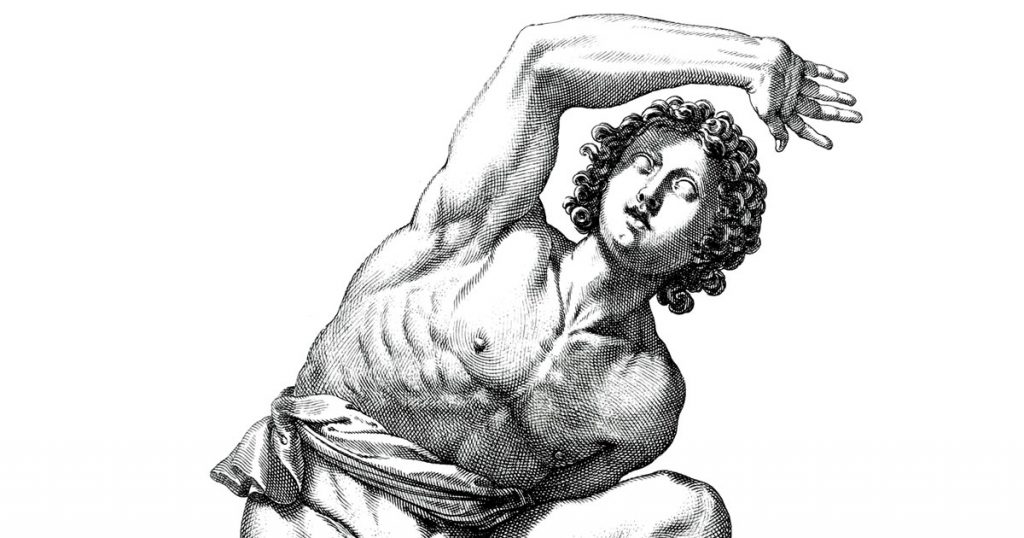
Roman Gladiators
In this gallery there are twelve black and white illustrations of Roman Gladiators. They come from the book Saturnalian Sermons Book Two, Those of the Gladiators by Justus Lipsius. There were two volumes, written in Latin, and published in 1585 and 1604. You’ll find various images of young gladiators and one of a gladiator fighting a lion. The images in Lipsius’s book are Renaissance reconstructions, combining information from ancient Roman literature and humanist scholarship. Archaeological objects such as carved reliefs showing gladiator combats, statues, decorative objects, and Roman coins depicting arena scenes also inspired the engravings made by contemporary artists. If you’re finding these drawings of Roman Gladiators valuable, you probably would also like the pages with more Images of Gladiators as well as Pompeii Statues. Enjoy!

Roman Gladiators 1

Roman Gladiators 2

Roman Gladiators 3

Roman Gladiators 4

Roman Gladiators 5

Roman Gladiators 6

Roman Gladiators 7

Roman Gladiators 8

Roman Gladiators 9

Roman Gladiators 10

Roman Gladiators 11

Roman Gladiators 12
More on Roman Gladiators
- The Gladiator: The Secret History of Rome’s Warrior Slaves ~ Alan Baker’s book reveals the techniques of Gladiatorial training school, then sets us ringside to witness the torturous battles between bulls, lions, jaguars, and battle-hardened human beings. With each breathtaking scene, the complex culture of world that created and adored these bloody games between man and beast comes into clear focus. A work of history that reads like fiction, The Gladiator brings to life Spartacus, Commodus, Caligula, and all of the other memorable players of the nearly thousand-year-long gladiatorial era.
- Those Who Are About to Die: A Day in the Life of a Roman Gladiator ~ In his book, Harry Sidebottom pulls us into the arena, and into the homes and forums of ancient Rome, taking the reader on an eye-opening, twenty-four-hour tour through Roman life at the height of the gladiatorial games, from the first century BC to the second century AD. We follow the gladiators through the schools (ludi) where they trained, watch in awe as the massive event unfolds—from the gambling at the pre-festival dinner, to the dawn rush to get a seat in the arena, to the resounding music, the elaborate stage sets, and, yes, the public executions that served as lunch-break entertainment—and we unlearn all the bogus movie tropes (gladiators did not have ripped bods; they were kept fleshy so they’d bleed more).
- The Age of Gladiators: Savagery and Spectacle in Ancient Rome ~ The Age of the Gladiators explores many savage spectacles of Ancient Rome, many of which have become proverbial for their cruelty, bloodlust and glory. From Gladiator fights in grand amphitheaters to chariot racing at the Circus Maximus, Romans had their pick of extreme spectator sports. Rupert Matthews explores the development of these customs, from religious rites into opportunities to bolster political esteem. Were Romans truly free citizens, governed by a fair democracy? And if not, what part did these free entertainments play in the political chess game? This fascinating book reveals all.
- The Roman Games: A Captivating Guide to the Gladiators, Chariot Races, and Games in Ancient Rome ~ What were the Roman games? What was it like for gladiators in the arenas of ancient Rome? How thrilling was it to see chariot races on the Roman race track? Were the condemned really thrown to lions at the Circus Maximus? These are a few of the questions that will be explored in this book. The Romans were known for their extensive civilization, but at the heart of Roman power was a penchant for the Roman games. Immense money and resources were spent constructing circuses, stadiums, and amphitheaters, all in an effort to create incredible spectacles for the Roman masses.
More Images of Roman Gladiators
Related