
Dirigibles
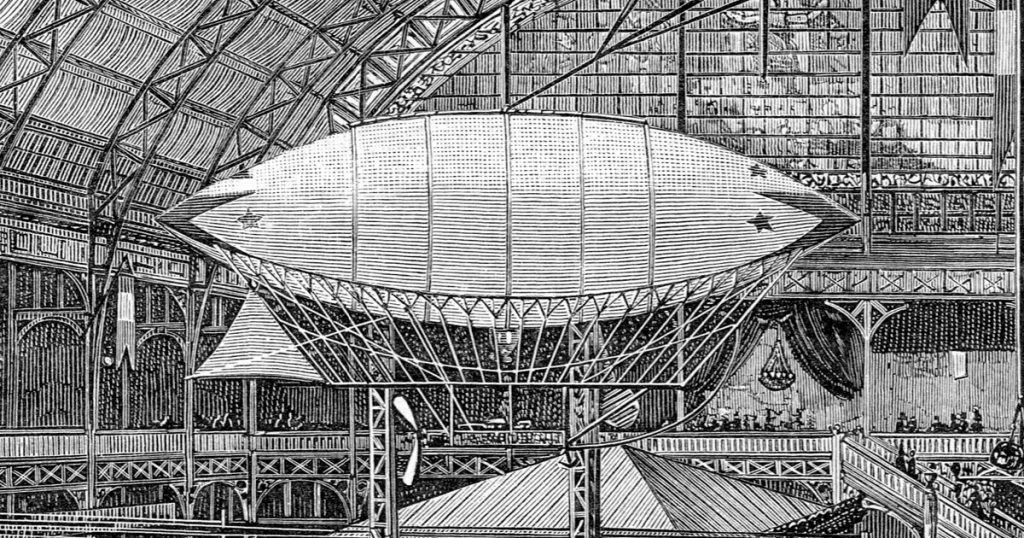
This gallery of Dirigibles features a collection of twelve vintage illustrations showcasing the early evolution of airships and powered balloons. Some sketches show the airships in flight over stylized landscapes, capturing the “steampunk” aesthetic of early Victorian aviation. They generally depict 19th-century designs, focusing on the transition from simple spherical balloons to elongated, steerable crafts. They come from two books. The first is Histoire de las Navigation Aerienne written by W. de Fonvielle in 1910. The second is Flying Machines Today by William Duane Ennis, which was written in 1911. If you find these drawings of Dirigibles useful, be sure to visit the pages with more Dirigible Airships and Drawings of Hot Air Balloons. Enjoy!

Dirigibles 1

Dirigibles 2

Dirigibles 3

Dirigibles 4

Dirigibles 5

Dirigibles 6

Dirigibles 7

Dirigibles 8

Dirigibles 9

Dirigibles 10

Dirigibles 11

Dirigibles 12
More on Dirigibles
- Empires of the Sky: Zeppelins, Airplanes, and Two Men’s Epic Duel to Rule the World ~ This book tells the sweeping story of the “Golden Age of Aviation,” focusing on the rivalry between the massive Zeppelin airships and the emerging airplane. It’s an excellent deep dive for those interested in the 20th-century transition from airships to modern flight.
- The Golden Age of the Great Passenger Airships: Graf Zeppelin and Hindenburg ~ A definitive resource filled with technical details, drawings, and photographs. It offers a firsthand account of the era of “giant rigids” by one of the few Americans to fly on them frequently during the 1930s.
- Zeppelins: The Golden Age of Airships ~ If you enjoyed the vintage illustrations on the page, this book is a perfect companion. It is lavishly illustrated with period photographs, vintage travel posters, and blueprints. It provides a comprehensive look at the social and cultural impact of these “silver giants,” from their use as weapons of war to their role in luxury travel.
- His Majesty’s Airship: The Life and Tragic Death of the World’s Largest Flying Machine ~ This book tells the gripping story of the British airship R101, which was intended to be the jewel of the British Empire’s aerial fleet. It details the political ambition and engineering hubris that led to its tragic crash in 1930—a disaster that was actually more deadly than the Hindenburg and effectively ended the British airship program.
More Images of Dirigibles
Related