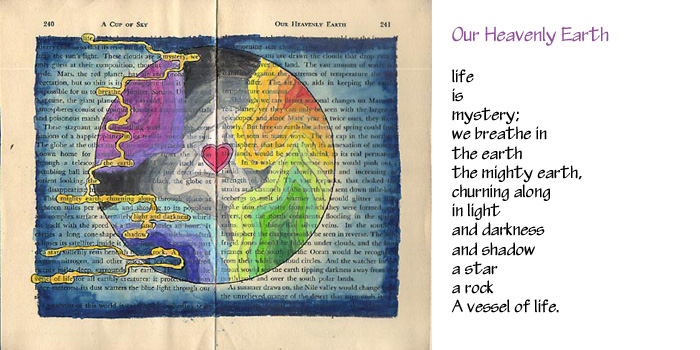
Altered Book Pages ~ A Cup of Sky
Altered Book Pages ~ A Cup of Sky
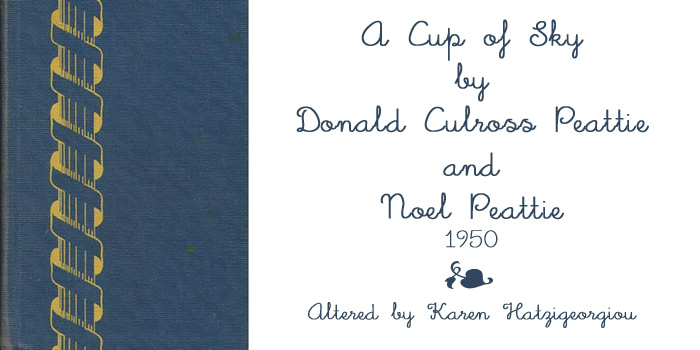
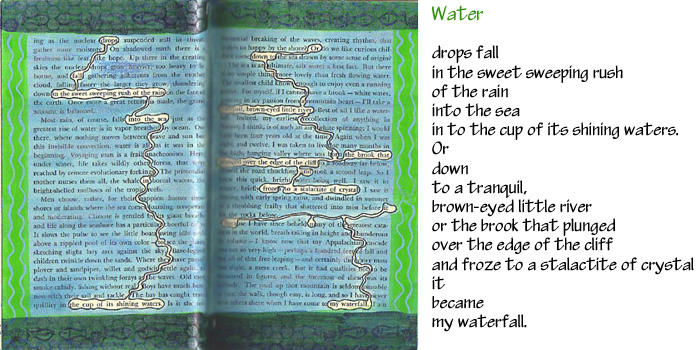
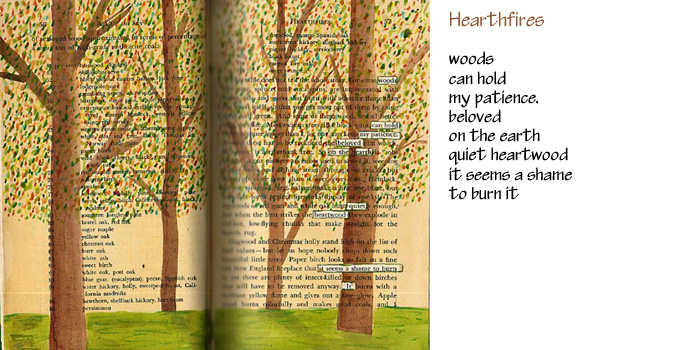
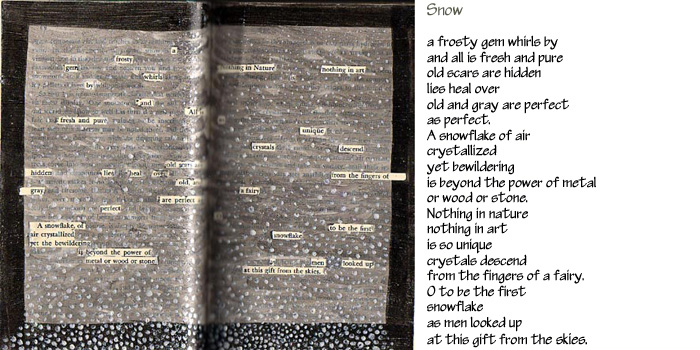
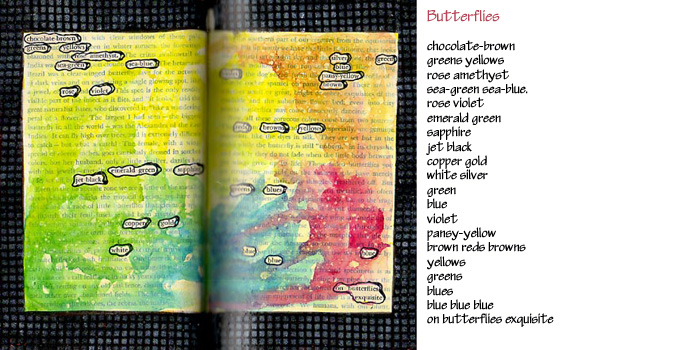
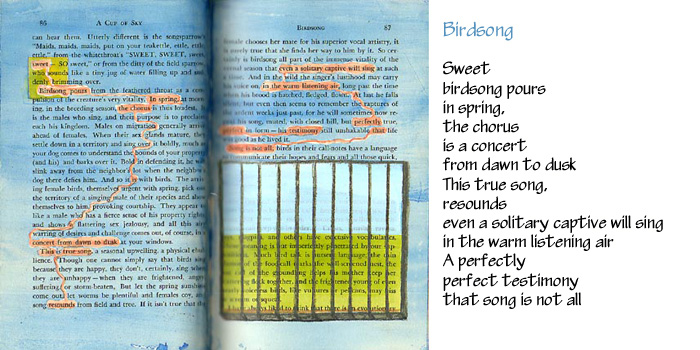
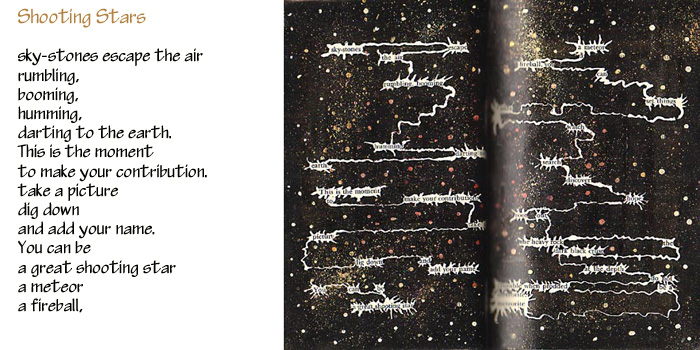
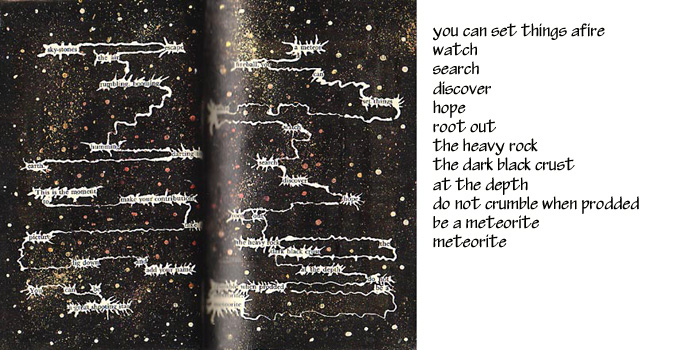
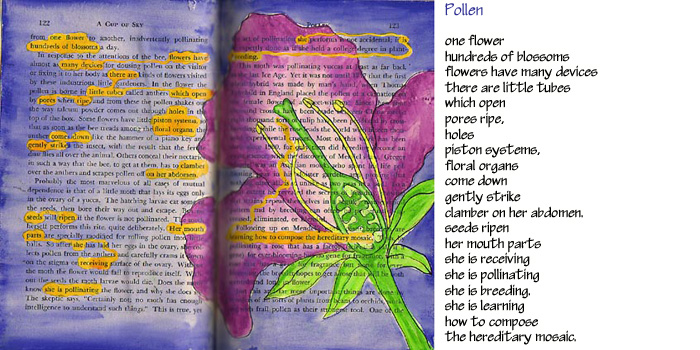
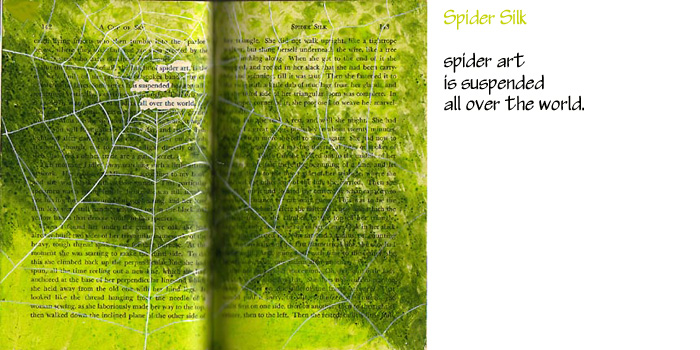
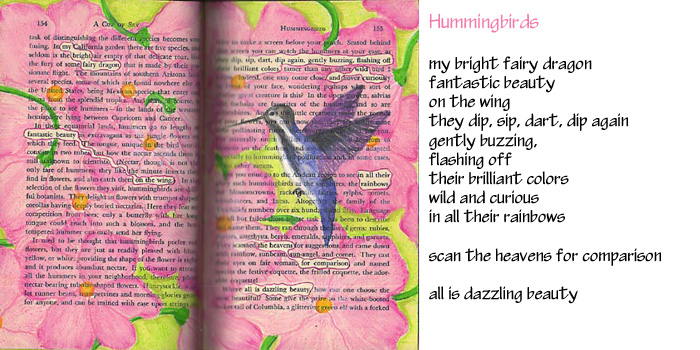
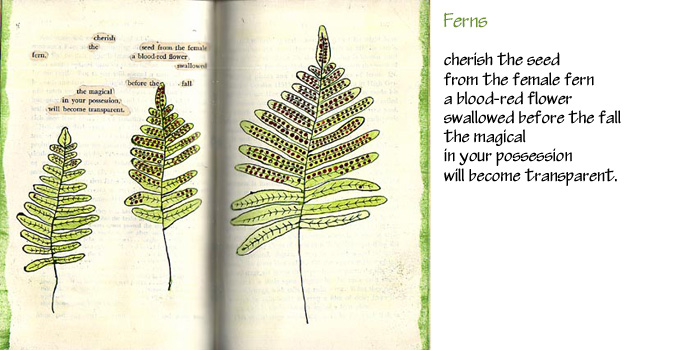
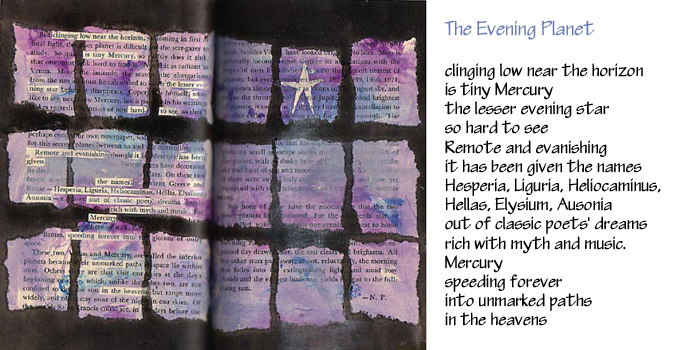
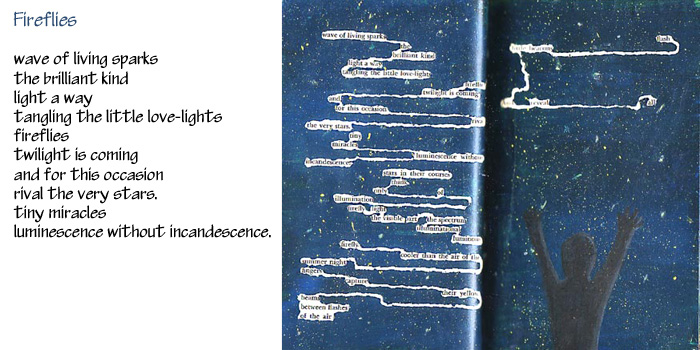
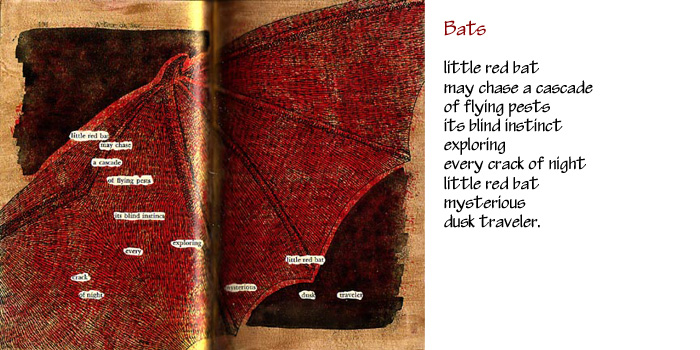
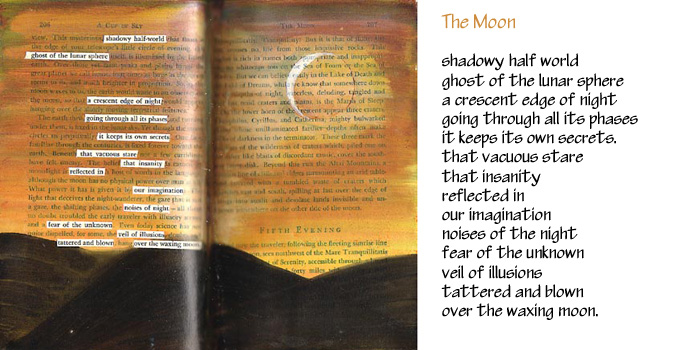
The nature poems in these altered book pages are based on the essays of Donald Culross Peattie and Noel Peattie. Each found poem was taken from a different chapter in the Peatties’ book. Every chapter explores the essence of the natural world, providing the perfect opportunity to create a nature poem and art for each essay.Getting Started
I found this small blue book at one of my library’s book sales and started working on it in January 2003. I had been doing a lot of work in As the Earth Turns and had also completed The Astronomer’s Apothecary , both of which had lots of collage work and embellishing. Needed a change and a new challenge, I decided to do some altered book pages totally devoid of layers. I didn’t want to rely on anyone else’s images but my own, and I wanted the book to be similar in concept to Tom Phillip’s A Humument.
So I studied Phillip’s work as displayed on the Internet, trying to get a feel for how he used pen and ink to obscure text. I tried to learn about his techniques, but I couldn’t find much information, so I had to figure things out on my own as I went along.
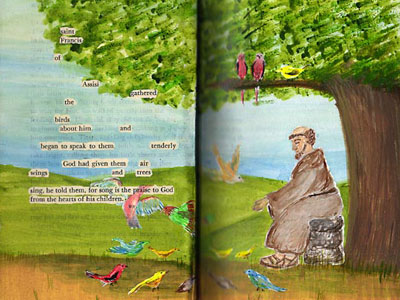
About the Book
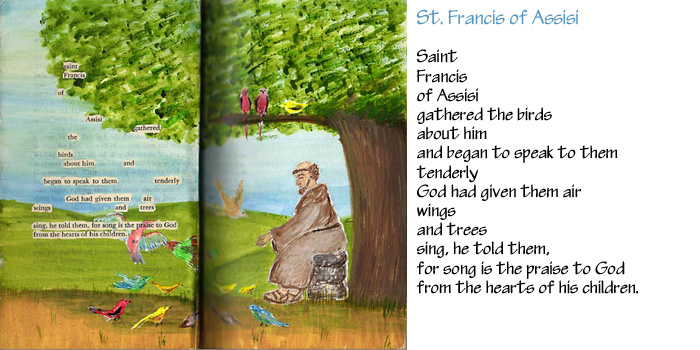
The title and the chapter headings for this book are what originally attracted me. The book is a collection of essays about the beauty of the natural world. It starts with an essay on the life of St. Francis of Asissi, and follows with individual chapters dedicated to some aspect of nature. Mr. Peattie was educated in botany. He was also a prolific writer. You can read more about his life and work at Trinity University Press. In addition, if you’d like to read the original text, copies of it can be purchased through BookFinder.com.
Art Challenges
I don’t think of myself as an illustrator. I like to doodle, but actually drawing a picture from start to finish is not something I’m used to doing. Having to come up with an image that I felt capable of drawing on my own for each of the pages was difficult. There were times when I was working on the book that I desperately wanted to glue down a picture or use a rubber stamp, but I restrained myself. I’m proud that I stuck to my original intention.
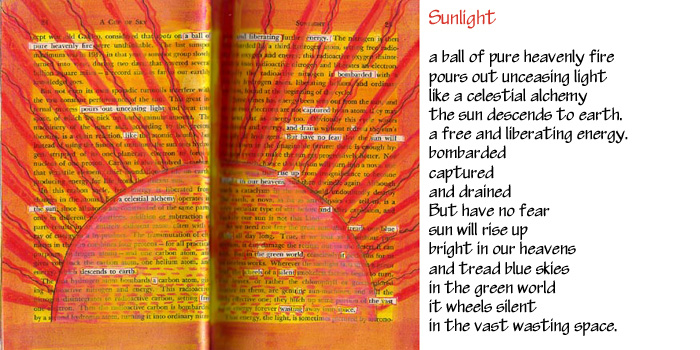
Using the watercolor crayons for the first time on the “Sunlight” page was incredibly liberating. I love the intensity of the colors and the control I have when blending shades together. Using watercolors on book pages can be problematic because of the wrinkling and warping that can occur when too much moisture hits the paper. But I found I only needed a slight amount of water in order to blend the colors together and make them come alive.
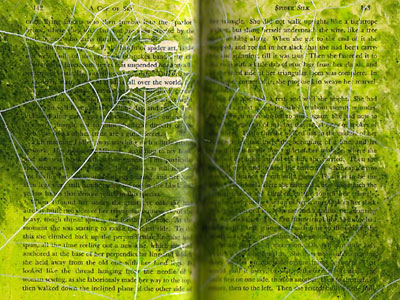
For each chapter, I wanted to preserve the title page and also the original artist’s illustration for each essay. I wanted the poem and artwork I created to go right behind each essay’s title page and illustration. That left me with a limited number of pages on which to actually create the poem and artwork. I only cut out about five pages from the entire book; I needed these pages to test out paints, glues, and masking methods. The rest of the pages were glued together using matte medium.
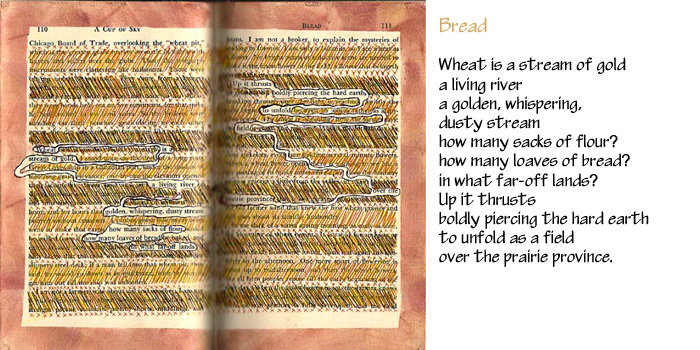
It’s a little nerve-wracking trying to transform the book in such a deliberate way. If I was working on art outside of the book, I could get rid of things that I didn’t like and move on. For example, there was a time when I wanted to rip out the work I’d done on the the pages for “Bread.” I like the poem that evolved, but I wasn’t happy with the art work. But the page had to remain where it was, the way it was. Mistakes had to be sworn over, learned from, and accepted as part of the art process. Ironically, “Bread” turned out to be one of my sister’s favorite pages.
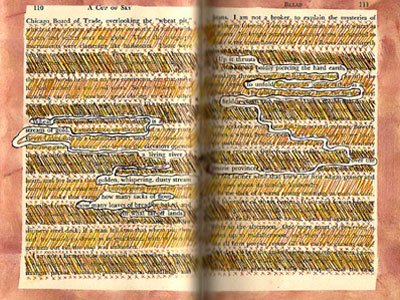
The Poetry
I couldn’t have written the poetry for these pages the way I did if Donald Peattie hadn’t written such jewel-like essays about the world around him. His writing might be considered a little overwrought and sentimental by today’s standards, but his use of language and description are beautiful and allowed me to create some satisfying found poetry. (For more ideas on how to write found poetry in your own altered book pages, be sure to read my article Found Poetry in Altered Books: Finding Your Voice.)
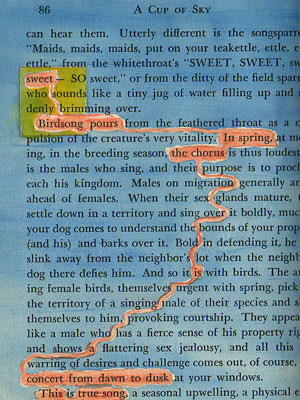
Because I wasn’t doing any cutting and pasting on these pages, transforming the imagery and meaning in the text was extremely challenging. It was also incredibly exhilarating. There is something quite magical about this process. It’s hard for me to put into words. I feel almost a spiritual bond with the original writer. I know that sounds very corny; I’m not a spiritual person in any sense, but I don’t know how else to describe it.
You know the scenes in the movie A Beautiful Mind, when John Nash is looking at the magazine and newspaper articles lying scattered on the floor around him? As he stares and stares, we see that words and phrases suddenly become illuminated on the page. That’s how I feel sometimes. I read and reread the text again and again. I look for words and combinations of words that seem to “illuminate” the page, and then I start to write them down. If I’m very lucky, I can create something beautiful and new. Somedays that process is so frustrating that I have to walk away for a while or work on another section. But always when I come back, I eventually find the words I need to create my poem.
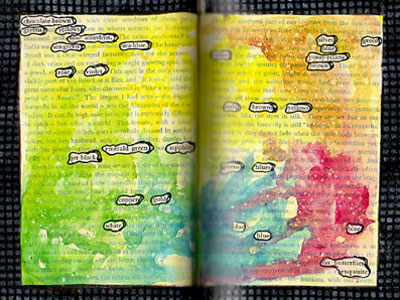
Protecting the Text
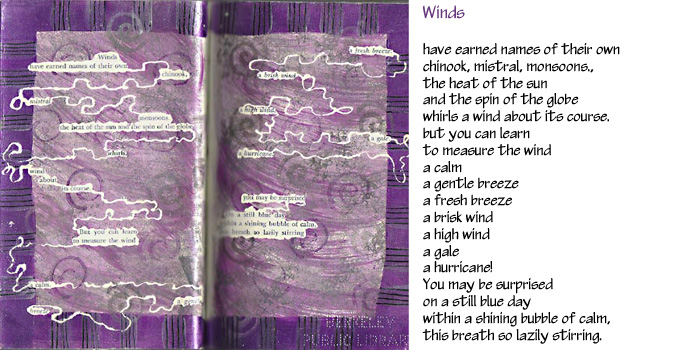
I started by writing out each poem on a separate piece of paper. Then masked the text on the page by using either Post-It single line labeling and cover-up tape or Masquepen. The Masquepen is like a very liquid pale blue rubber cement. It’s in a little bottle with a long skinny tip. I carefully poured it on the page over anything I wanted to protect. As it dries, it becomes clear and slightly tacky, and forms a seal over the page that resists paints and inks. If you’d like to read more about using Masquepen on your altered book pages, please read my article Masquepen ~ Tips for Using Masquepen. This stuff is wonderful to use in altered books, but I found that when I rubbed it off the page, it lifted some of the text ink. (Before using the Masquepen, make sure to test it on a piece of scrap text from the book you’re altering.)
I solved the problem by covering every double page spread with a very thin layer of Fluid Acrylic Matte Medium before starting any work. It made the Post-It paper adhere better, and it protected the text from the slightly adhesive quality of the Masquepen.
I did have some problems with the Post-It tape wanting to curl up when it got wet. So I started using my finger to smear matte medium over the tape after I had it applied it on top of the text. This made it a little harder to remove after all the artwork was done, but it kept paint from slipping under the tape and obscuring the text.
Art Materials
My art supplies are for these altered book pages were from Dick Blicks, Jerry’s Artarama, and All Art Supplies.
All my illustrations were done using the following media:
~FW Acrylic Artists Ink and Pearlescent Liquid Acrylics with speedball pen and brush
~Caran d’Ache Neocolor II water-soluble crayons
~Lumiere Acrylic Paints
~Various ink pads
~Black gel pen
I hope you enjoy all the altered book pages from A Cup of Sky.
A Cup of Sky